Search is changing — not just another Google update, but a fundamental transformation in how information is discovered, evaluated, and delivered. With AI Overviews, Google SGE (Search Generative Experience), and AI-powered assistants like ChatGPT Search, Perplexity, Gemini Search, and Bing Copilot, people are beginning to interact with search engines more conversationally and expect instant, summarized answers.
This shift means one thing: ranking #1 won’t be enough — being cited by AI search systems will matter more. Whether you're a marketer, business owner, or digital agency, adapting early can give you an advantage while others scramble to catch up.
In this guide, we’ll break down how AI search affects SEO, what’s changing, and actionable steps to future-proof your visibility.
🤖 What Is AI Search?
AI Search refers to search engines that generate answers, not just show links. They use artificial intelligence to understand context and intent, pull information from multiple sources, and summarize it in a way that feels like a human explanation.
Examples include:
| Platform | Type | Behavior |
|---|---|---|
| Google AI Overviews / SGE | Traditional + Generative | Summarizes content and cites sources |
| Bing Copilot Search | Hybrid AI | Answers conversational queries with citations |
| Perplexity | Fully AI Search Engine | Answers questions and links to sources |
| Gemini Search (coming) | AI Assistant Search | Supports multimodal, conversational queries |
These systems can synthesize web content and answer complex questions instantly — which changes how users click and engage.
📉 Will AI Reduce Website Traffic?
For some queries, yes. Early studies suggest AI-powered answers may reduce click-through rate for:
- Basic definitions
- Quick factual lookups
- Simple “how many / how tall / what is” questions
But here’s the good news: websites cited in AI summaries are seeing higher trust and better-quality traffic — even if clicks are fewer. That means less random traffic and more qualified, ready-to-buy users.
🔥 The Shift From Search Engine Optimization to Answer Engine Optimization (AEO)
Traditional SEO focused on:
- Keywords
- Rankings
- Backlinks
- Domain authority
AI search focuses on:
- Context and intent
- Credibility and expertise
- Consistency across pages
- Depth and helpfulness of answers
Google increasingly evaluates content based on E-E-A-T (Experience, Expertise, Authoritativeness, and Trustworthiness), real examples, first-hand insights, and structured formatting. Thin or generic content will not work — even if it's perfectly optimized around a keyword.
📌 How AI Search Changes Content Strategy
| Old SEO | New AI-SEO Requirements |
|---|---|
| Keyword-stuffed content | Conversational, semantically rich language |
| Short posts (500–900 words) | Deep, comprehensive content (1,500–3,000+ words) |
| Single focus keyword | Topic clusters, related questions, natural language queries |
| Generic writing | Content with proof, examples, and real authorship |
| No schema | Rich structured data, FAQs, and citations |
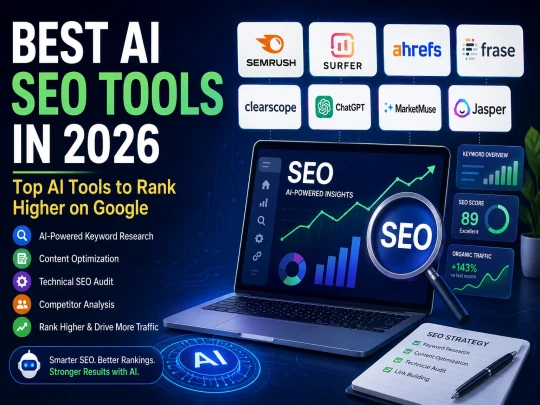
🛠️ How to Optimize Your Website for AI Search in 2025
1. Add Structured Data (Schema)
Use schema markup to help AI understand your content, entities, and relationships. At minimum, implement:
- Article schema
- FAQ schema
- Breadcrumb schema
- Author/person schema
- Product or service schema (if relevant)
2. Update Existing Content With Helpful Enhancements
For every important article, add:
- Real-world examples and scenarios
- Case studies or results
- Screenshots or diagrams
- Tools and processes you actually use
- Clear steps and takeaways
AI engines prefer expert-backed, experience-rich content — not generic rewrites.
3. Answer Questions in Natural Language
Incorporate conversational phrasing that mirrors how people ask questions, such as:
- “If you're wondering whether…”
- “The short answer is…”
- “Here’s what most businesses miss…”
This aligns your content with real user intent and the way large language models interpret queries.
4. Build Topic Clusters
Instead of isolated blog posts, create interconnected content hubs:
Main Topic → Subtopics → FAQs → Guides → Case Studies
This structure helps AI search engines recognize your site as an authority on a subject, not just a single keyword.
5. Use Author Profiles and Credibility Signals
Add visible proof that real experts are behind your content:
- Named author with bio
- Links to LinkedIn or portfolio
- Years of experience or niche focus
- Achievements, certifications, or notable clients
AI systems increasingly detect fake or generic authorship and may down-rank it.
6. Monitor New Metrics
Go beyond classic “rank tracking.” Pay attention to:
- Whether your content is cited in AI summaries
- Visibility in AI search snippets or overviews
- Engagement metrics (time on page, scroll depth)
- Qualified conversions, not just raw traffic
🧩 What This Means for Businesses and Agencies
If you're a web development agency, SEO consultant, SaaS company, or content creator, you have two options:
- Ignore AI search and risk losing relevance in the next 12–18 months.
- Optimize early and position yourself as an authority while competition is still low.
Right now there is a window of opportunity because most websites are still optimized only for traditional SEO, not for AI-driven search systems. Adapting early can help you capture that edge.
🏁 Conclusion
AI search isn’t the distant future — it’s already here. Search results are moving from lists of links to intelligent answers, and the websites referenced in those answers will gain the most trust, leads, and business.
You don’t need to replace SEO; you need to upgrade it. By focusing on helpful, expert-led content, structured data, and topic authority, you’ll be ready for the next generation of search.
🚀 Need Help With AI-Ready SEO?
Want help implementing AI-driven SEO, structured content, or SGE optimization for your business?