Table of Contents
- What Is Artificial Intelligence?
- What AI Can Do
- Write Academic Content
- Create Visual Art
- Learn & Improve
- Make Investment Decisions
- Analyze Conversations
- Assist in Healthcare
- Translate Languages
- Power Self-Driving Cars
- Assist Legal Work
- What AI Can’t Do
There’s a growing divide in how the world views artificial intelligence (AI). For some, AI represents the next major frontier—one that could streamline industries, discover drugs faster, solve global challenges, and make life dramatically easier. For others, AI sparks fear: the loss of jobs, loss of control, and even the possibility of machines becoming more intelligent than the humans who created them.
Many business leaders, professionals, and students fall somewhere in the middle. They're optimistic about AI’s ability to improve productivity and reduce operational bottlenecks, yet hesitant about its uncertain long-term consequences and ethical boundaries.
With the rise of tools like ChatGPT, Google Gemini, Claude AI, Midjourney, and autonomous driving systems, AI is no longer a hypothetical future. It has already entered classrooms, workplaces, healthcare systems, government workflows, and even personal daily routines. It now writes emails, generates art, analyzes legal cases, screens medical scans, translates languages, and much more.
But this rapid acceleration raises an important question:
What can AI realistically do today—and what remains beyond its capabilities?
What Is Artificial Intelligence?
Artificial Intelligence (AI) is the field of computer science focused on creating systems capable of performing tasks that normally require human intelligence. This includes reasoning, learning, perception, decision-making, pattern recognition, and language understanding.
Unlike traditional software, which follows pre-written instructions, AI systems learn by analyzing vast amounts of data—images, text, audio, code, or behavior—and identifying patterns. Over time, the system improves its responses and predictions based on feedback and continuous training.
AI is not magic, and it’s not alive. It’s a computational system designed to simulate human-like thinking based on data—not consciousness.
Today, AI can be categorized into three key types:
- Narrow AI (Weak AI): Performs one specific task extremely well. (Example: ChatGPT writing text or Tesla Autopilot navigating roads.)
- General AI (AGI): Theoretical AI that can think and learn like a human across multiple domains.
- Superintelligence (ASI): Hypothetical AI that surpasses human intelligence in every field.
Right now, all real-world AI systems fall under Narrow AI—even the most advanced ones.
9 Things AI Can Do Today
AI is already transforming industries, workflows, and personal productivity. Let’s look at what modern AI is capable of—right now.
1. Write Academic Essays — and Almost Anything Else
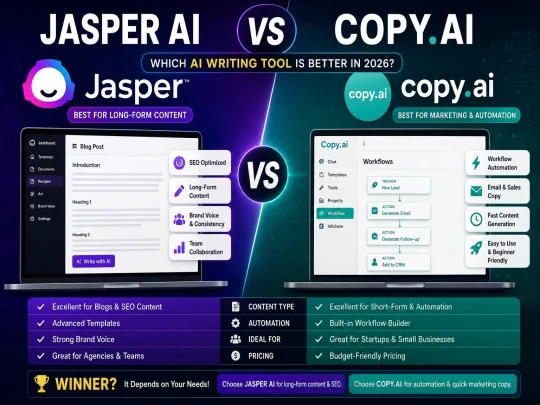
Generative AI tools such as ChatGPT, Jasper AI, and Google Gemini can craft essays, blog posts, marketing campaigns, poems, business reports, and even full-length books. Students have used it to pass assignments, professionals use it to improve writing workflow, and creators use it for brainstorming ideas.
AI writing technology is powerful because it can:
- Summarize long research papers
- Rewrite content in different tones
- Generate outlines and frameworks
- Detect grammar and structural flaws
- Offer alternative versions instantly
And for the record—it’s worth pointing out that this article is written by a human. Pinky swear.
2. Create Visual Art
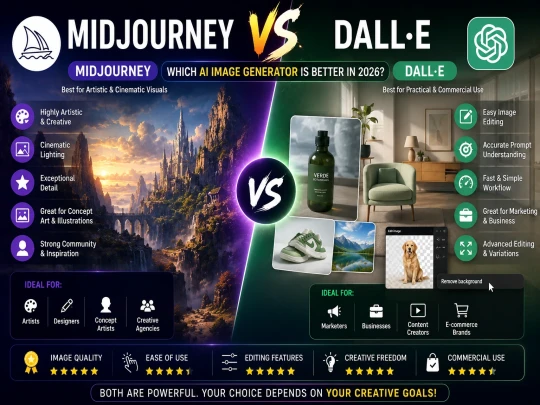
AI art tools like Midjourney, DALL-E, and Stable Diffusion can generate:
- Logos and branding
- Realistic photography-style images
- Digital illustrations
- Video storyboards
- Photo edits and enhancements
AI art is now used in marketing campaigns, video production, product concept design, and even entertainment. The results can sometimes be astounding—and occasionally bizarre—but the progress is undeniable.
3. Learn and Improve Through Data Exposure
AI improves with more data. The more an AI model sees—whether it's language, medical scans, market behavior, or movement—the more accurate and efficient it becomes.
Boston Dynamics is a perfect example. Their robots evolved from stiff, clumsy machines to agile systems capable of walking, running, jumping, and doing complex tasks—thanks to machine learning and reinforcement feedback loops.
4. Make Investment Decisions
More than 52% of global financial institutions use AI-powered platforms to analyze markets, assess risks, predict price movement, and automate trading systems. High-frequency trading (HFT) systems can execute decisions in milliseconds—far faster than human traders.
AI helps eliminate emotional bias—one of the biggest weaknesses in investing. Still, it’s not perfect, as markets can behave unpredictably.
5. Analyze Conversations at Scale
In customer service, sales, and support centers, AI tools analyze thousands of conversations to detect tone, sentiment, objections, and friction points. This enables companies to:
- Improve customer satisfaction
- Train teams faster
- Optimize messaging
- Reduce churn
Instead of listening to 1,000 calls manually—AI delivers insights in seconds.
6. Assist Doctors in Diagnosing Diseases
AI in healthcare is one of the most transformative applications today. AI can analyze patterns in:
- Medical scans (X-rays, MRIs, CT scans)
- Pathology slides
- Genomic data
- Symptom databases
Studies show AI can sometimes detect early cancer signs sooner than trained specialists—especially in mammograms and dermatology.
7. Translate Languages in Real Time
AI-powered translation tools like DeepL, Google Translate, and built-in smartphone translation engines have revolutionized real-time communication.
We now live in an era where someone speaking Japanese can converse live with someone speaking Spanish—without knowing each other’s language.
8. Power Self-Driving Cars
Autonomous vehicles rely on AI, cameras, LiDAR, GPS systems, and neural networks to navigate roads and respond to traffic conditions.
Self-driving systems are improving yearly, though full autonomy still faces safety, ethical, and legal challenges.
9. Assist Legal Research & Summarization
AI tools can scan legal documents, summarize court decisions, research precedents, and draft legal briefs. However, hallucinated citations show AI is not yet reliable enough to practice law independently.
6 Things AI Can’t Do — Yet
Despite rapid progress, AI has limitations—technical, moral, and cognitive.
1. Multitask Like a Human
AI excels at one specialized task but struggles with doing multiple tasks simultaneously with human-level adaptability.
A toddler can play, listen, observe emotions, and react socially—AI cannot.
2. Explain Why It Makes Decisions
AI often generates outputs without explaining its logic. This “black-box problem” makes AI unreliable in sensitive areas like legal trials or high-risk medical decisions.
3. Make Moral or Ethical Judgments
AI doesn’t understand values, culture, religion, empathy, consequences, or human experience.
A machine may follow rules—but ethics requires compassion and context.
4. Feel Emotions
AI may mimic emotional responses, but it does not experience joy, sadness, fear, pride, or love. Its empathy is programmed—not genuine.
5. Create Completely Original Ideas Without Input
AI recombines existing knowledge—it does not truly create from nothing. Human imagination remains unmatched.
6. Fully Replace Human Workers
AI may automate repetitive tasks, but strategic thinking, emotional intelligence, leadership, creativity, and innovation remain deeply human strengths.
Final Thoughts
AI is unquestionably transforming the world—but not replacing humanity. It is a tool, not a threat by default. The future belongs to those who learn to use AI wisely—not fear it.
As AI continues to evolve, the most valuable skill will not be doing what AI can do—it will be doing what AI cannot.